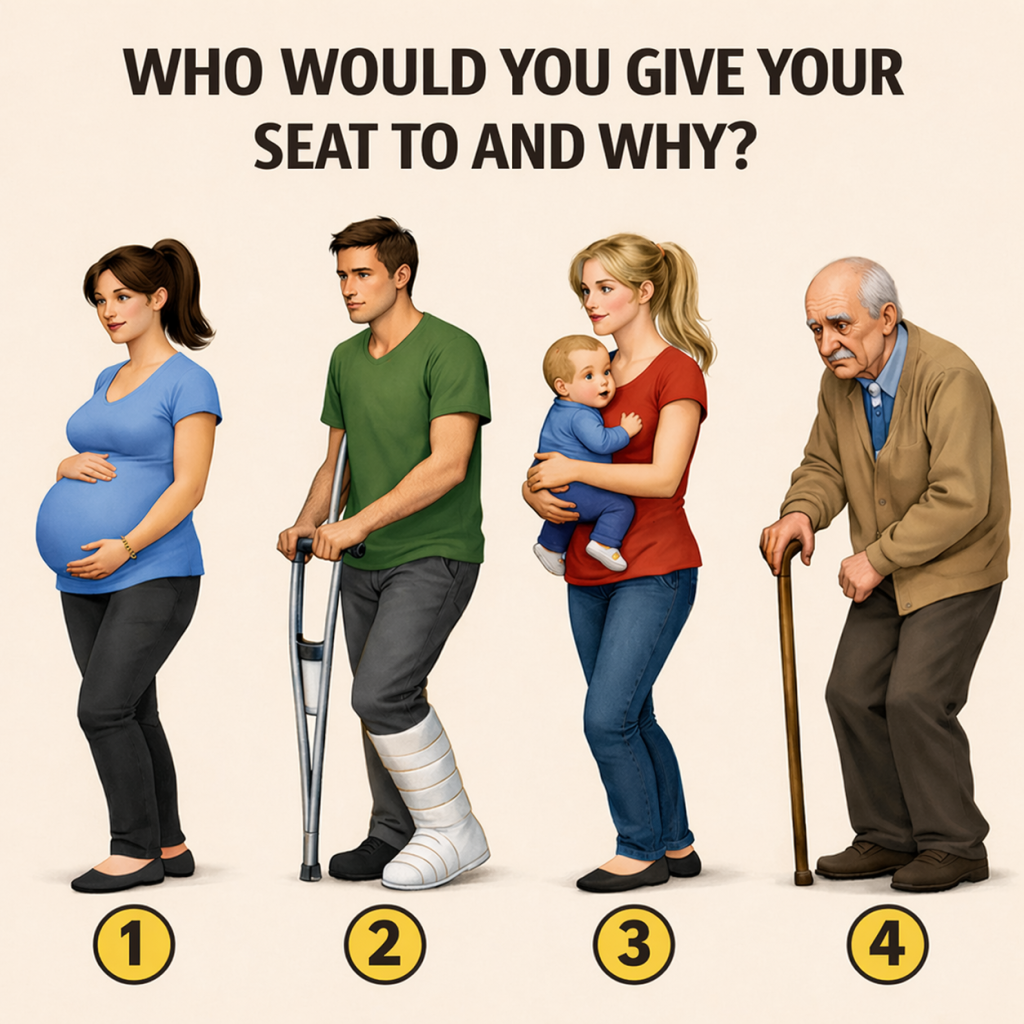
In a crowded space where comfort is limited and choices must be made, a simple question arises: Who would you give your seat to—and why? At first glance, the answer may seem obvious, but the image challenges us to look deeper into our values, instincts, and sense of empathy.
Four individuals stand before us, each representing a different kind of need. A pregnant woman, carrying not only physical weight but also the responsibility of new life. A young man on crutches, clearly injured and struggling to maintain balance. A mother holding a baby, managing both her own stability and the safety of her child. And finally, an elderly man, whose age may have brought wisdom, but also physical fragility and fatigue.
This is not just a question of kindness—it is a reflection of how we prioritize compassion. Do we respond to visible pain, like the man with crutches? Do we consider vulnerability, like the pregnant woman or the elderly man? Or do we think about responsibility, like the mother caring for a child?
There is no universally “correct” answer, and that is precisely what makes this scenario powerful. Each choice can be justified, each perspective defended. What matters most is the reasoning behind the decision. It reveals how we perceive need, fairness, and humanity.
In everyday life, we are constantly faced with similar, though less obvious, decisions. Moments where we can choose to act with empathy or remain indifferent. This image serves as a reminder that small acts of kindness—like offering a seat—can carry significant meaning. They reflect not only our awareness of others but also our willingness to put someone else’s comfort before our own.
Ultimately, the question is not just about giving up a seat. It is about understanding others, recognizing silent struggles, and choosing compassion in a world that often moves too fast to notice them.
