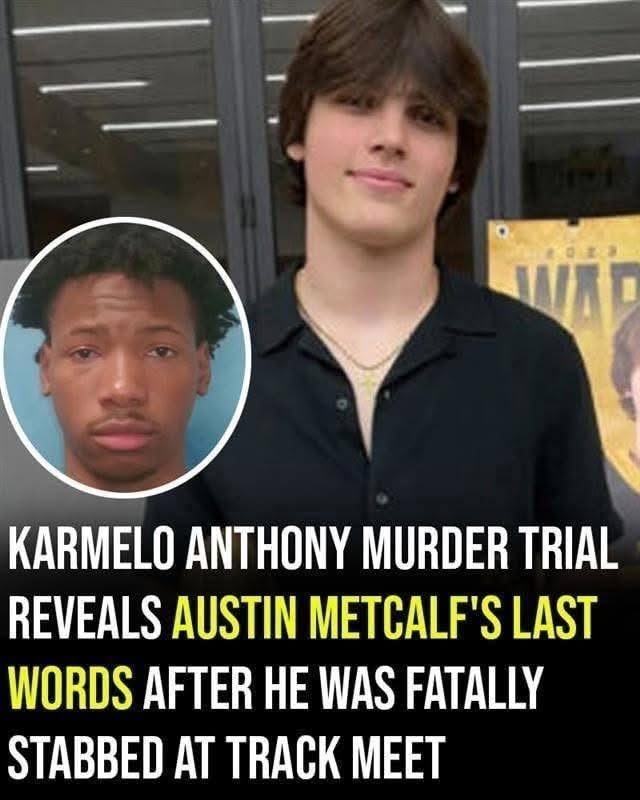
A mother screamed as the words “death penalty” echoed through the courtroom. Gasps followed, then silence settled heavily over the room.
In a Texas courtroom, seventeen-year-old football star Austin Metcalf’s killer, Karmelo Anthony, was sentenced to die. The verdict fractured a quiet suburb.
Some called it justice. Others saw vengeance. Beneath the ruling, deeper questions surfaced about youth, violence, and a system many believe is failing.
As reporters rushed to file headlines, those closest to the tragedy faced something far more enduring than news coverage: the permanence of loss.
Austin Metcalf’s jersey now hangs in a school hallway, a symbol of both memory and grief. Friends replay endless “what ifs” no verdict can answer.
For his family, the sentence offers no resurrection—only a different kind of finality, one that replaces hope with a quieter, lingering sorrow.
Across the divide, Karmelo Anthony’s family left under flashing cameras, holding tightly to one another, insisting he is more than his worst act.
Appeals will stretch on for years, binding both families to the same tragedy, while the community confronts missed warnings, absent support, and the uneasy truth that such violence rarely emerges without warning.
