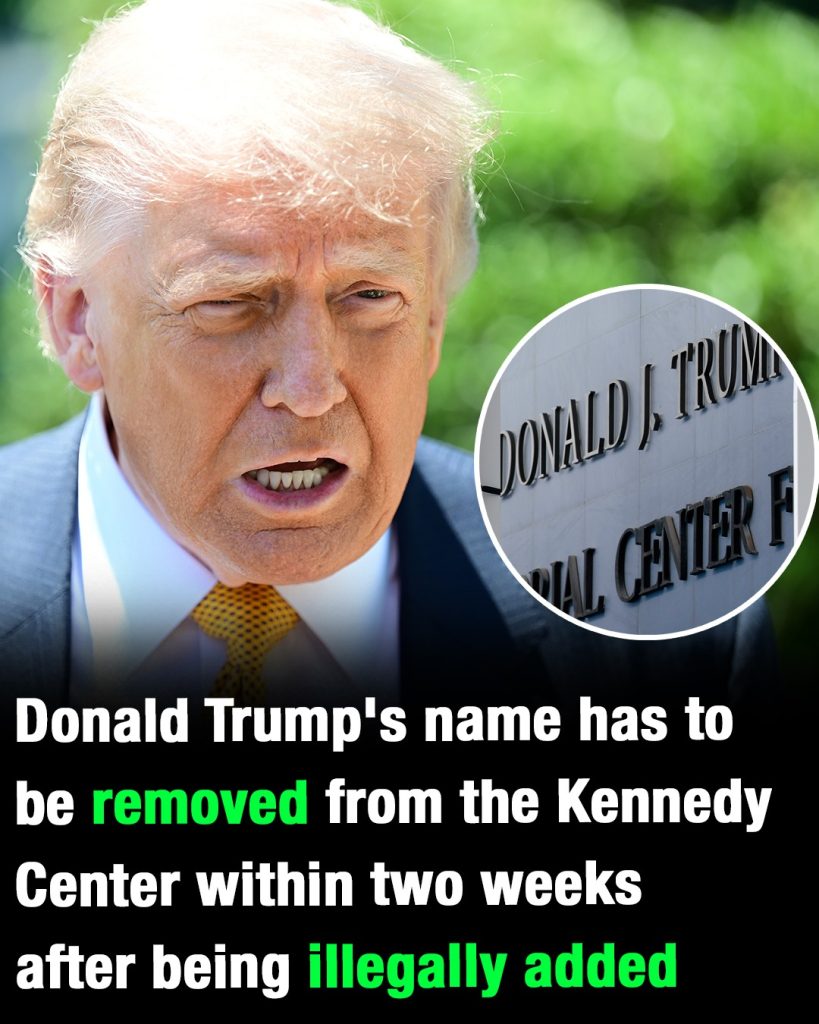
A federal judge has ordered the removal of Trump’s name from the Kennedy Center, ruling that the rebranding was unlawful. The decision marks a sharp legal rebuke and reignites debate over political influence on national institutions.
The court found that the so-called “Trump Kennedy Center” had no legal basis to exist. According to the ruling, only Congress has the authority to rename the institution.
Judge Christopher Cooper emphasized that internal maneuvers could not override federal law. Allegations surrounding muted microphones and a rushed vote further undermined the legitimacy of the name change.
The case was brought forward by Representative Joyce Beatty. What some critics initially dismissed as political theater has now been validated in federal court.
The ruling goes beyond a name dispute. It addresses a broader question about who has the power to shape national symbols and cultural landmarks in the United States.
For supporters of the Kennedy legacy, the decision represents a restoration of historical integrity. The Kennedy Center, long associated with President John F. Kennedy, returns to its original identity.
Trump allies, however, see the ruling as another example of limits placed on influence after leaving office. The decision underscores that authority tied to the presidency does not extend indefinitely.
As workers begin removing signage and official references, the building reclaims its established name. The outcome serves as a reminder that even powerful figures cannot permanently imprint themselves on public institutions without legal authority.
