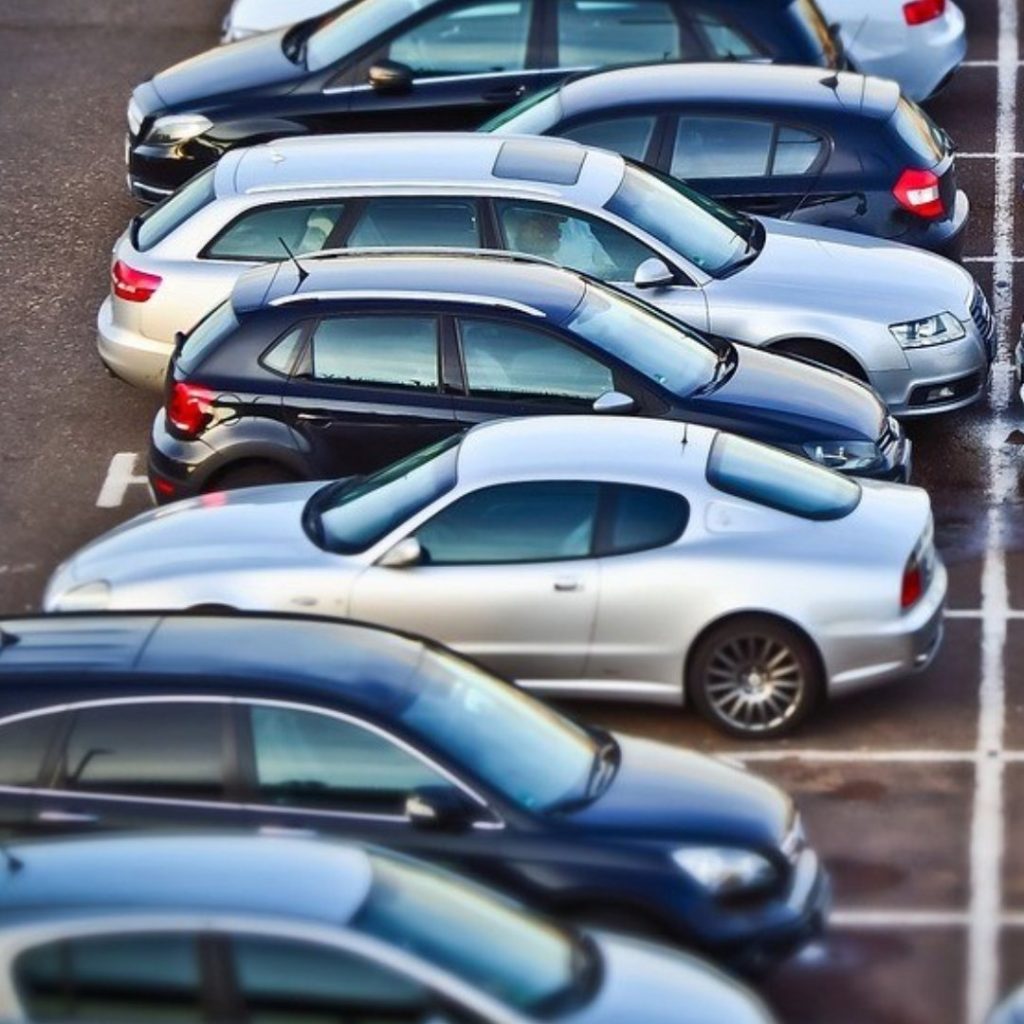
Backing into a parking space is often defended as “safer” because it can make pulling out easier later. But in real-world parking lots—crowded lanes, impatient drivers, pedestrians crossing unpredictably—reverse parking can quickly become a high-risk, high-frustration maneuver that creates problems for everyone nearby.
The core issue is simple: many drivers misjudge space, timing, and cross-traffic when reversing, especially in tight lots. Even with modern safety tech, backing in still increases the chances of mistakes.
Why Backing Into Parking Spaces Can Be Dangerous
Reverse parking demands precise awareness of multiple hazards at once—moving vehicles, pedestrians, carts, poles, and blind spots. In busy lots, that’s a lot to manage in a short distance.
Key safety concerns include:
- Reduced visibility while reversing
- When you back in, you often can’t fully see what’s happening behind you, especially with larger vehicles, tinted windows, or crowded surroundings.
- You’re forced to rely heavily on mirrors and sensors, which can miss fast-moving cross-traffic or smaller objects.
- Cross-traffic risk
- Parking lots are full of cars cutting through lanes and pedestrians stepping out between vehicles.
- Rear cross-traffic alerts help, but they’re not foolproof—and mistakes at low speed can still cause serious injuries.
- Not every car has helpful technology
- Newer vehicles may have rear cameras and warning systems, but many cars on the road do not.
- Without a camera, backing into a tight space becomes significantly harder and more error-prone.
- Large vehicles amplify the problem
- Bigger SUVs and pickups can be difficult to position accurately.
- Misalignment increases the chance of clipping another car, striking an object, or blocking adjacent stalls.
- Parallel or tight-angle situations become more complicated
- Some parking layouts already limit visibility.
- When reversing, the windshield and vehicle angles can obstruct your view, forcing extra head turns, mirror checks, and slow corrections.
Why It Annoys Everyone Else in the Lot
Even if someone is capable of reverse parking smoothly, the process typically takes longer than pulling forward. In a packed lot, that delay can snowball into a bottleneck.
Common frustrations for other drivers include:
- Traffic backups when someone stops and begins a multi-step reverse maneuver.
- Confusion in tight lanes where there isn’t enough room for the reversing arc.
- Space misuse, especially if the vehicle temporarily straddles lines during the attempt.
- Extra time with little payoff, since any time saved when leaving later may not compensate for the time spent reversing in.
In short: your reverse parking “strategy” can become everyone else’s problem.
The Argument for Pulling Forward Instead
Pulling forward into a space is usually the simplest, cleanest option because it improves your immediate visibility and reduces the complexity of the maneuver.
Benefits of pulling in forward:
- Better overall visibility as you enter the space
- Faster parking flow for the entire lot
- Less margin for error in tight spaces
- More predictable movement for pedestrians and nearby vehicles
And for larger vehicles, forward parking often provides more room to adjust and reduces the chance of awkward angles that cause poor alignment.
It’s Illegal in Some Places
Reverse parking isn’t just unpopular—it can be prohibited in certain locations. Some municipal lots and busy areas restrict backing in because:
- The maneuver itself may be considered riskier in dense traffic conditions.
- When vehicles later pull out forward, others may not get the same visual cues they expect (like clearly seeing brake lights in the way they anticipate during close-quarters traffic flow).
Rules vary by location, but the bigger point remains: if a parking lot or municipality bans it, they’re signaling it’s a known safety and congestion issue.
The Bottom Line: Just Stop Backing In
Reverse parking can create an unhealthy norm where drivers take on extra risk for minimal benefit. It can also:
- Increase the chance of low-speed collisions
- Put pedestrians at higher risk
- Cause avoidable delays for everyone else
- Lead to tickets or enforcement issues in areas that require plates/permits to be easily visible
The practical takeaway is straightforward: look for an open space and pull in forward. If the space is too tight to enter cleanly, choose a different spot. Parking lots are already chaotic—your best contribution is to park in a way that is simple, visible, and predictable for everyone around you.
