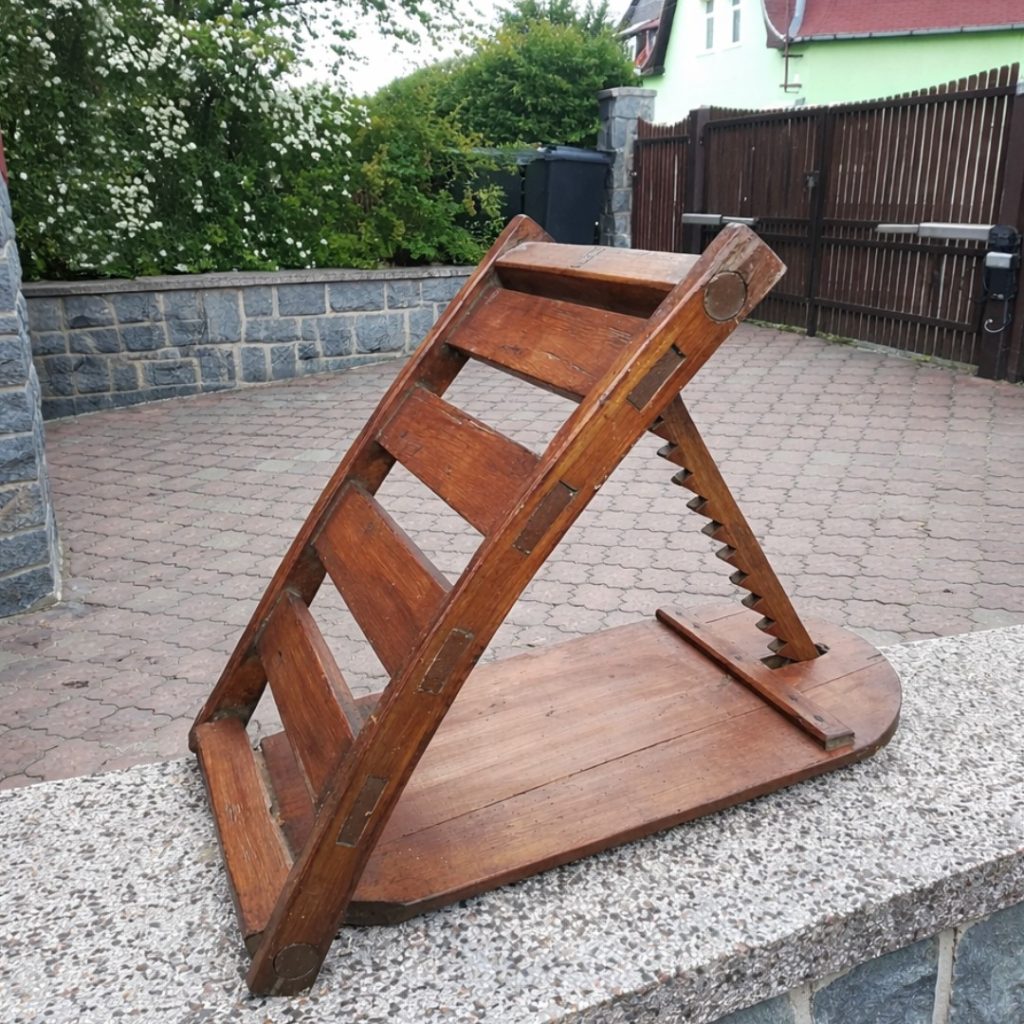
At first glance, the wooden device in the photo looks like a simple, rugged frame made from hardwood such as oak or yellow pine. But in many farm kitchens, a tool like this was a workhorse: a traditional wooden cheese press, built to apply steady pressure so fresh curds could become a firm, fragrant block or wheel of cheese.
What it’s called
This type of tool is generally known as a wooden cheese press (often called a farmhouse cheese press).
Some versions used wooden screws or metal screws, while others—like the style suggested by the notched “rack” adjustment visible on the side—could tighten pressure in steps using a ratchet-style setting.
When it first appeared
Cheese pressing itself is ancient (people have pressed curds for thousands of years), but dedicated home presses like this became especially common in Europe and North America during the 18th and 19th centuries, and remained widely used into the early 20th century—before factory-made cheese and modern equipment took over.
What it was used for
The purpose was simple and essential: press out whey (liquid) from the curds so the cheese could set properly.
A press helped homemakers:
- Remove excess whey for a drier, more stable cheese
- Compact the curds into a consistent shape
- Improve texture (fewer gaps and cracks inside the cheese)
- Support better aging by creating a firm, tight mass that wouldn’t spoil as easily
How it worked (the basic process)
- Fresh curds were placed into a mold, often lined with cheesecloth.
- The mold went into the press, centered on the base so liquid could escape.
- Pressure was applied gradually—either by turning screws or adjusting a locking/ratchet mechanism—so the curds compressed without bursting or deforming.
- As whey drained out, the cheesemaker would increase pressure over time, helping the cheese become more solid and uniform.
- Once pressed, the cheese was removed, salted (depending on the recipe), and left to age, developing its flavor and aroma.
Why the “drainage” design mattered
A key feature of old presses was controlled drainage. Whether through slats, channels, or simply spacing that let liquid run off, the goal was the same: whey needed a clear path out while the curds stayed packed together under pressure.
Why this tool was so important in farmhouse life
Before refrigeration and supermarkets, making cheese was a practical way to preserve milk. A sturdy press like this helped turn a highly perishable ingredient into something that could last—often becoming a household staple and a source of pride.
Bottom line: This wasn’t just a wooden gadget—it was a piece of everyday food technology. A wooden cheese press let home cheesemakers apply controlled pressure to squeeze out whey, shape curds, and create a dense, age-worthy cheese with real flavor.
