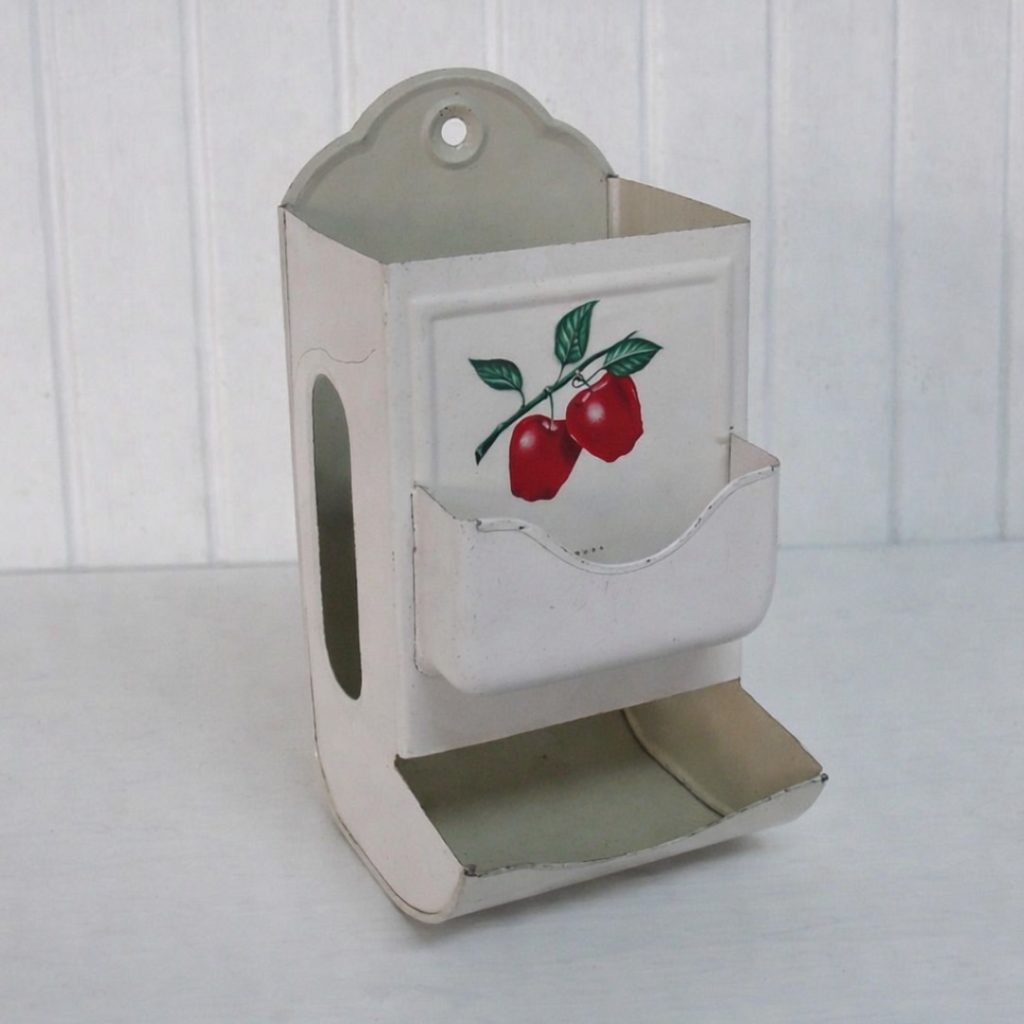
If you grew up in (or love the look of) old American kitchens, this little white metal piece will feel instantly familiar. The item in the photos is a vintage wall-mounted metal matchbox and match holder, decorated with a classic red apple motif—the kind of cheerful design that fit perfectly in mid-century kitchens.
What it’s called
Collectors and sellers usually describe it as a “vintage wall match holder,” “matchbox holder,” or “match safe.”
In plain terms: it’s a wall organizer for wooden matches and a cardboard matchbox, made from thin painted/enamel-coated metal.
When it first became popular
While the exact year depends on the maker (and many have no visible brand mark), this style is most commonly associated with the mid-20th century (roughly the 1940s through the 1960s)—a time when matches were used daily for gas stoves, fireplaces, and household lighting tasks, and people liked keeping them in a fixed spot instead of hunting through drawers.
What it was used for
This holder was designed to do three practical jobs:
- Keep matches in one consistent place (mounted on the wall, often near a stove or fireplace)
- Hold a matchbox securely so it didn’t get crushed, wet, or lost
- Provide a lower tray to catch spent matches or debris, helping keep counters and floors cleaner
- A front pocket where a matchbox (or match-related items) could be stored and grabbed quickly
- A side slot/opening that suggests the matchbox could be slid in/out from the side for easy access
- A bottom catch tray meant to collect leftover matchsticks or residue
Why people collect it today
Beyond function, these pieces are popular now because they bring back a very specific vibe: retro kitchen décor, farmhouse nostalgia, and that unmistakable “apples in the kitchen” theme that showed up on towels, tins, and wall accessories for decades. Many are also valued for their patina—small chips, rust spots, and wear that show real household use.
A quick modern note
Even though it was made for everyday match use back then, today many people keep it as vintage décor or a conversation piece, especially since open flame items should always be handled carefully and kept away from kids.
